
Queer history is more than a reflection; it is a blueprint for the future. For nations that are decades behind in the struggle for equality, our past provides the roadmap for acceptance and legal protection. Yet even in the UK, the fight is far from over. From the tireless grassroots effort to ban conversion practices to global resistance against state-sanctioned persecution, our community remains on the front line: scapegoated, used as a political football, and persecuted. Progress is a choice, not a guarantee.
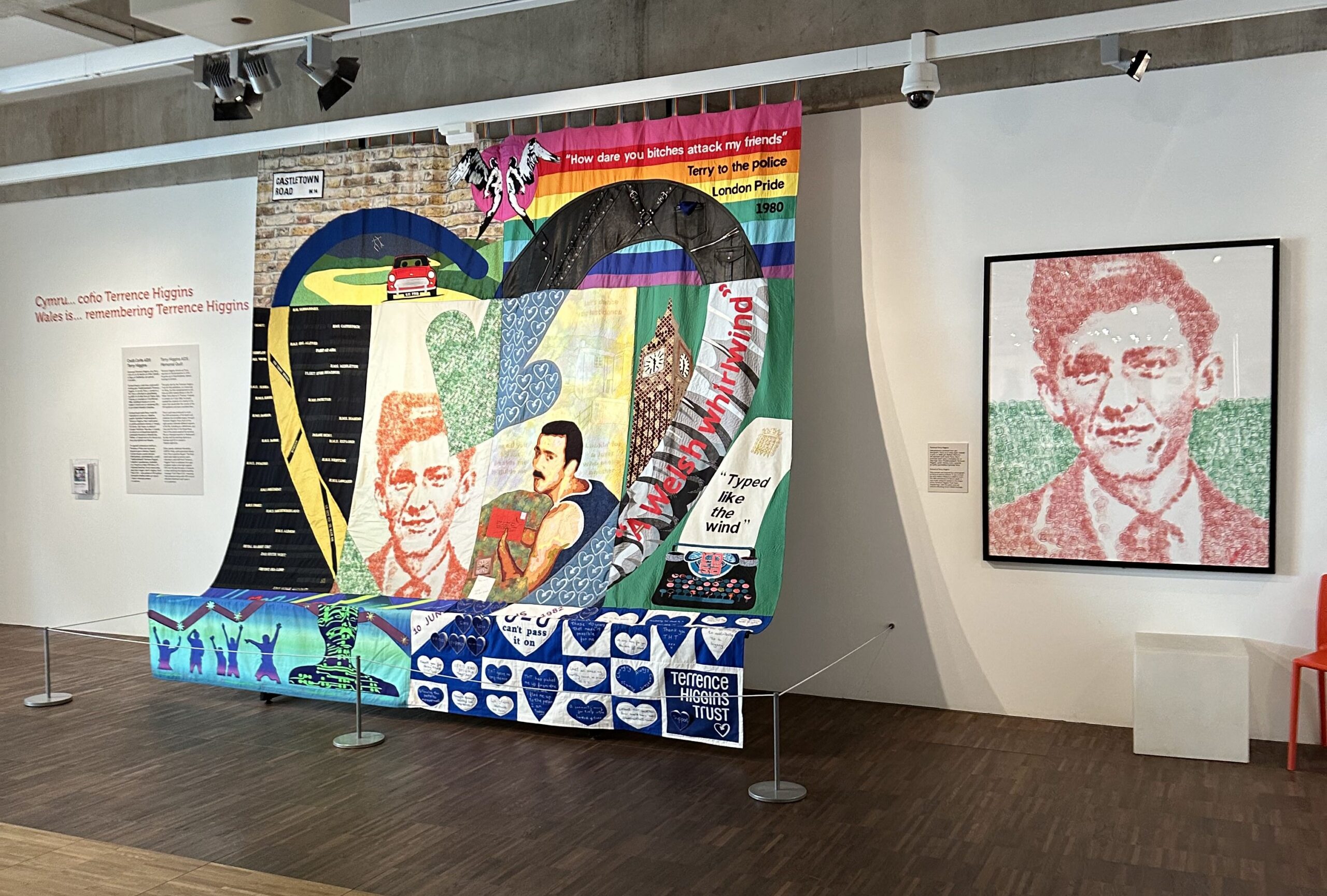
This is why the arrival of the Terrence Higgins Trust Memorial Quilt at St Fagans, Cardiff, feels so significant. For In Progress, being based just a few miles away, its presence is difficult to ignore – a chance to encounter a stitched record of resilience against the cruelty of the AIDS epidemic and to encounter history not as something distant but as something that continues to shape lives today.
Walking into the “Wales is…” exhibition, the quilt becomes visible at the far end of a long room. Along the walls, displays reflect different aspects of Welsh life, but it is the scale of the quilt that stands as a stark contrast to the rest of the room: bold, bright, impossible to ignore. As you move closer, you feel drawn in. It feels almost as if it approaches you as you approach it – each panel inviting you to hear stories woven so beautifully into each thread of the fabric.
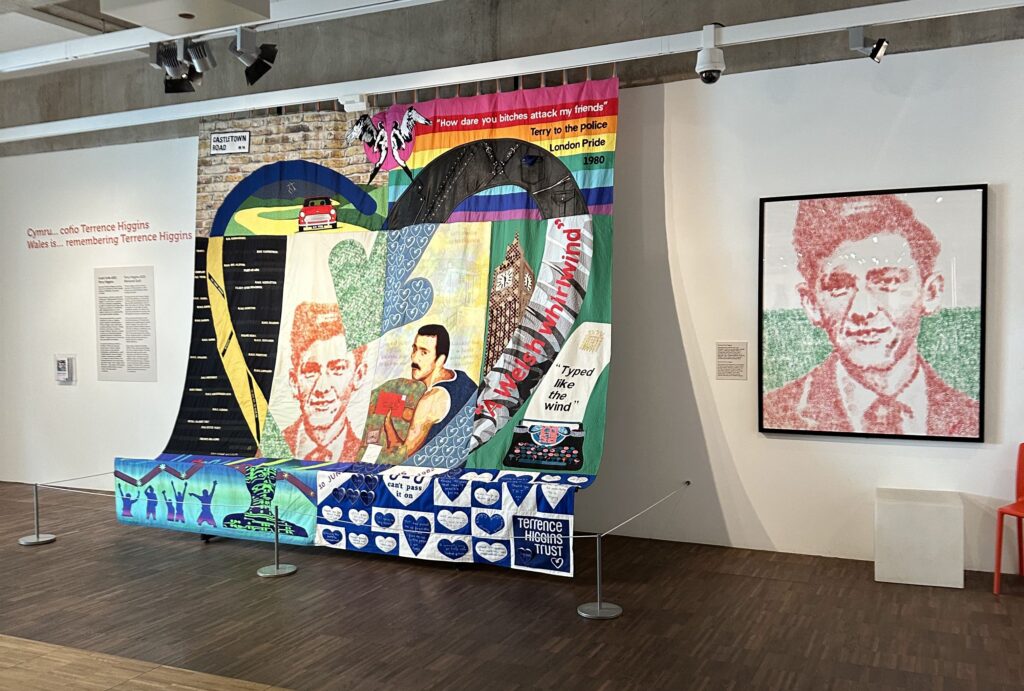
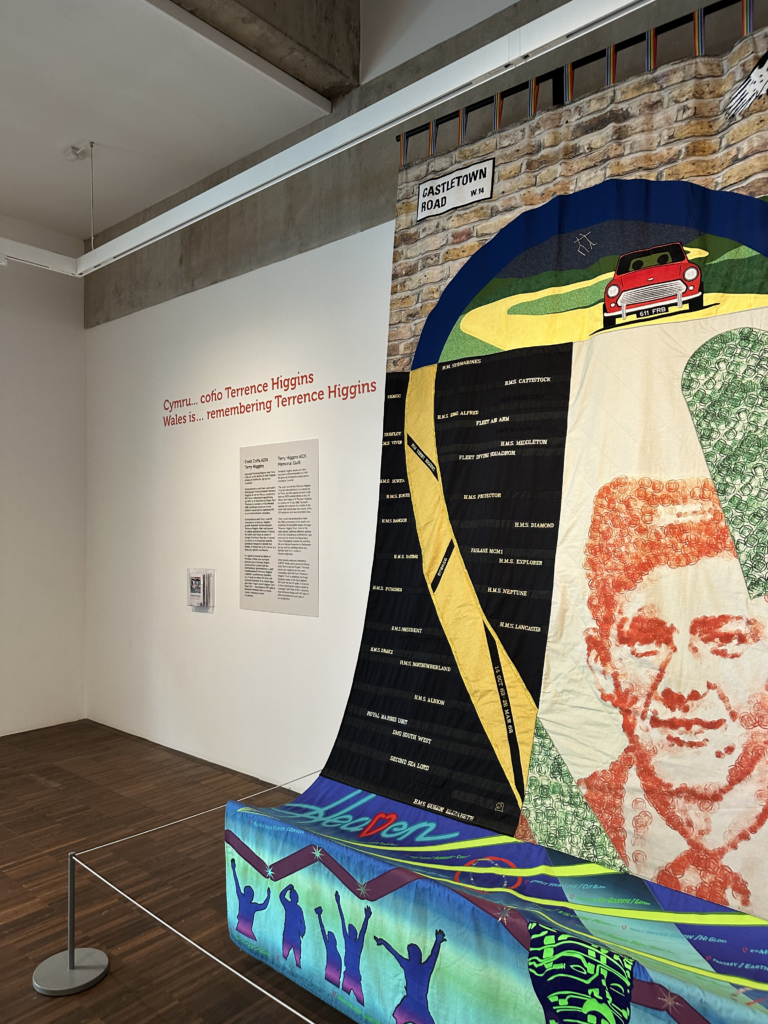
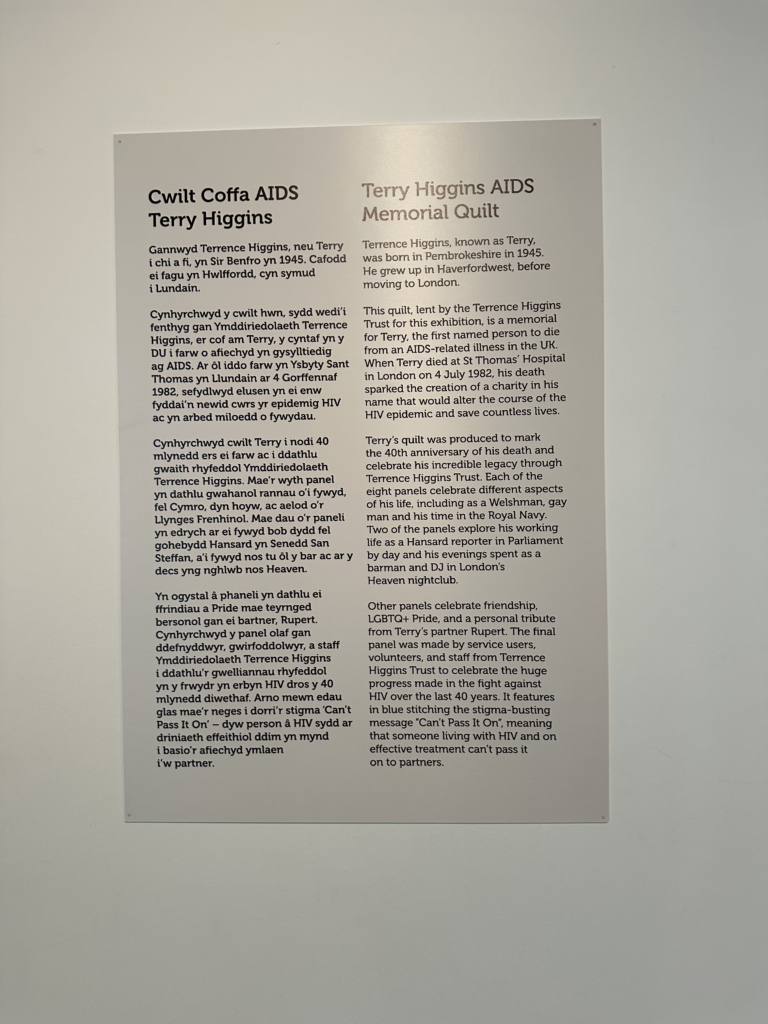
Terrence Higgins was born in Pembrokeshire in 1945. He was one of the first people to die of an AIDS-related illness, and the quilt celebrates his legacy and the founding of the Terrence Higgins Trust. Each of the eight sections tells a different part of his story, his unique experience as a Welshman and a gay man, and his time serving in the Royal Navy – grounding a global crisis in a personal narrative.
But it extends beyond his life; it speaks of something collective: the role of community and grassroots action in fighting for LGBTQ+ rights. It reminds us of a period when lives were torn apart but, at the same time, bound together by solidarity against government inaction, stigma, prejudice, and discrimination. It serves not just as a memory but as a reminder that progress depends on people working together: organising, supporting one another, and demanding a better future for everyone.
The quilt is on display at St Fagans Museum of History, just outside of Cardiff, Wales, until the 29th of June, 2026. Visit museum.wales to find out more.
Leave a Reply